Family First Is Harder Than It Sounds | Jesse Rendall (Dad of 5, Sweater Ventures)
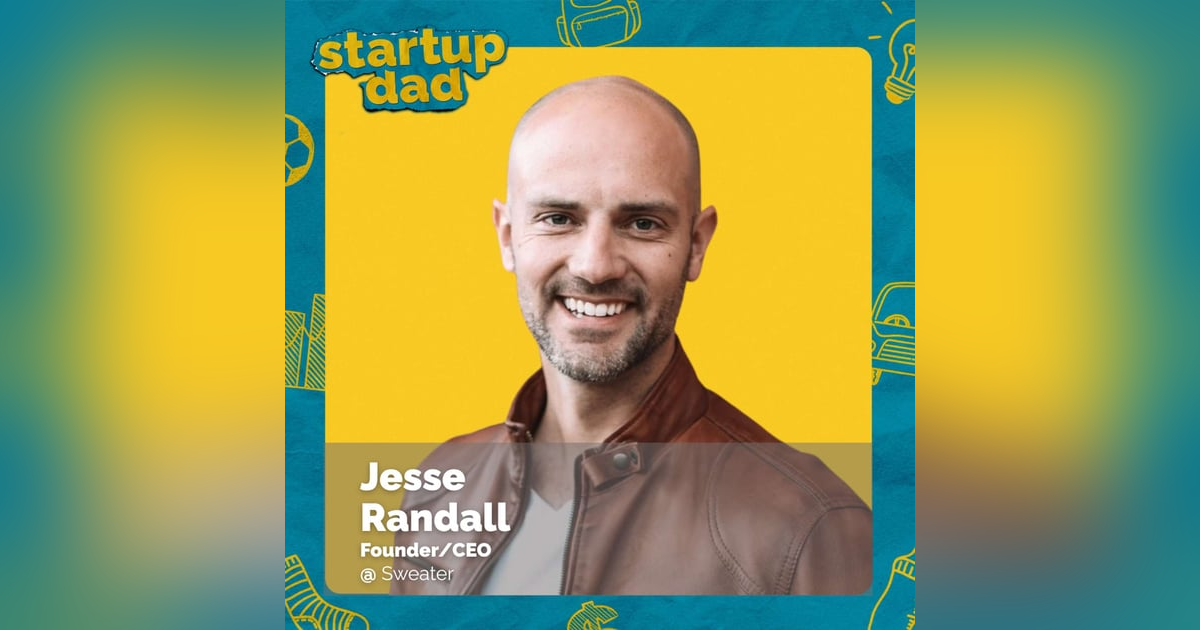


Jesse Randall is the founder and CEO of Sweater, a company making venture investing accessible to anyone with a smartphone. He is also a husband and father of five kids, ranging from 7 to 17 years old.
In this conversation, Jesse shares how he thinks about balancing ambition, marriage, and fatherhood without losing sight of what matters most. He talks about moving his family to Puerto Rico, why putting career above everything else can leave you miserable, and why dads need to be strong, caring, and fully engaged at home.
Jesse also opens up about his parenting philosophy, including why he believes fathers should be authoritative first and friends second, how he and his wife use a no hint dropping rule to communicate better, and why both parents need something outside of work and family that is just for them. We also get into one of the most fascinating parts of the conversation, how Jesse is using AI to rethink his kids’ education and teach them how to think critically in a world where information is everywhere. We discussed:
- Moving a family to Puerto Rico: How Jesse approached a major family transition and helped his kids adapt to a completely new environment.
- The cost of putting career first: Why Jesse believes chasing professional success at the expense of family can leave you deeply unfulfilled.
- What strong fatherhood really looks like: Why dads need to be caring, present, emotionally grounded, and willing to lead at home.
- Better communication in marriage: The “no hint dropping” rule Jesse and his wife use to avoid passive-aggressive communication and say what they actually mean.
- Why parents need a third pillar: Jesse shares why both partners need something outside of work and family that helps them stay grounded and fulfilled.
- Rethinking education with AI: How Jesse is using AI to redesign his kids’ learning and teach them to think critically in a world full of instant information.
Where to find Jesse Randall
- LinkedIn: https://www.linkedin.com/in/sweaterceo/
- Sweater: https://www.sweaterventures.com/
Where to find Adam Fishman
- FishmanAF Newsletter: www.FishmanAFNewsletter.com
- LinkedIn: https://www.linkedin.com/in/adamjfishman/
- Instagram: https://www.instagram.com/startupdadpod/
- X: https://x.com/fishmanaf
In this episode, we cover:
(00:00) Welcoming Jesse Randall, founder and CEO of Sweater!
(01:39) Why Jesse moved his family to Puerto Rico
(03:09) Helping five kids adjust to a massive family move
(05:16) Why putting career first can leave you miserable
(09:41) The family and faith values that shaped Jesse
(13:53) Preparing kids for a world changed by AI
(16:31) What it means to be a strong and present dad
(24:21) Why every parent needs something outside work and family
(28:32) Endurance sports, headspace, and staying grounded
(32:17) Why dads should be authoritative first and friends second
(35:43) The “No hint-dropping” rule that changed their marriage
(39:54) Why clear communication matters with kids too
(43:29) How Jesse is rethinking education with AI
(53:30) The biggest surprise after 17 years of fatherhood
(57:46) Lightning round: Parenting philosophy, family rhythms, and what matters most
Resources From This Episode:
Sweater Ventures: https://www.sweaterventures.com/
Ball Floater (Toy): https://a.co/d/04uaYZ3C
The Emperor's New Groove: https://www.imdb.com/title/tt0120917/
Dumb and Dumber: https://www.imdb.com/title/tt0109686/
Ford Expedition: https://www.ford.com/suvs/expedition/
—
Support Startup Dad
For sponsorship inquiries, email: podcast@fishmana.com.
For Startup Dad Merch: www.startupdadshop.com
[00:00:00] Jesse Randall: I cannot even tell you how baffled I am that I have a 17-year-old who’s about to graduate from high school. He was born like yesterday. But seriously, standing on the tail end of this, in five years, I’m only going to have two kids at home out of five. Five years ago it was like nothing. While people have told me that my whole life, I don’t think that I fully absorbed it until pretty recently. Within that, the lesson is like, my gosh, don’t screw around.
[00:00:25] Adam Fishman: Welcome to Startup Dad, the podcast where we dive deep in the lives of dads who are also leaders in the world of startups and business. I’m your host, Adam Fishman. Today, I’m joined by Jesse Randall, the Founder and CEO of Sweater, which makes venture investing accessible to everyone with a smartphone. He’s a husband and father of five kids ages seven to 17. Jesse shared his perspective on how to be an authoritative father while still being caring and empathetic. Why solely prioritizing career over family is a miserable path. Why it’s important for parents to each find something outside of work and family that they’re passionate about and his no hint dropping framework in communicating with your spouse. Also, the way he’s been able to leverage AI to turbocharge his kids’ education. If you like what you hear, please subscribe to Startup Dad on YouTube or Spotify so you never miss an episode.
[00:01:26] Adam Fishman: You’ll find it everywhere you get your podcasts. I hope you enjoy today’s conversation with Jesse Randall. Jesse Randall, thank you for joining me today on Startup Dad. It’s really great to have you here.
[00:01:39] Jesse Randall: Yeah, hey, it’s my pleasure. Anything to advance the conversation of dads running startups.
[00:01:45] Adam Fishman: I love it. So you have clearly thought a lot about what family means and what your role as a father and a husband should be in your family. And I suspect that there’s probably at least one, maybe more stories that have kind of shaped those beliefs. But before we get into that, I want to just jump right out and ask, so six months ago you moved your whole family, which is your wife, five kids from like seven to 17, two dogs and a cat. That’s like a zoo to Puerto Rico from I think Utah or Colorado or somewhere around there. So you moved six months ago. Why? What was the genesis for that move?
[00:02:27] Jesse Randall: Well, it was definitely a circus on the flight over for sure. We had a lot going on. I remember the first airplane we got on, the stewardess was like, “Wait a minute, those are all yours and you’ve got three animals.” My gosh. So yeah, it was a bit of a lift to get over there. But yeah, the genesis really came down to a business decision and did not get too deep into that. Puerto Rico has some incentives to build businesses on the island. And so we qualified for that and decided to take advantage of it. So they require a resident to be there and looked around the company and said, “You know what? I think that this would be a good thing for our family.” We pulled everything together and made it happen. So we’ll probably be there for a couple of years and then we’ll make some decisions after that.
[00:03:09] Adam Fishman: Has it been hard for your five kids to make that adjustment? I think about you’ve multiple teenagers. Teenagers get pretty entrenched in their friend groups and their way of living, not known as the most flexible human beings on the planet, but has that been challenging with your kids and how did you kind of bring that to them or was it not even a discussion and you were just like, “We’re doing this. Everybody get excited.”
[00:03:36] Jesse Randall: Well, I mean, there’s a little bit of the latter, right? It’s like, “Well, we need to do this. So how do we do it?” It became more of the question. The kids have done really great. So we had one senior in high school and he was basically graduated. He just had a couple of credits left to do and was doing mostly concurrent enrollment and he was able to extend that. So we actually approached him first because he was the one that we were kind of like, “We don’t know which way he’s going to go.” And so instead of surprising him with everybody else, we pulled him aside the day before and had more of an adult level conversation and said, “Hey, this is what’s going on in our life. This is what it means. This is why we need to do it.
[00:04:14] Jesse Randall: This is how deep we are into it. We’re not backing out. So how do we have this conversation? Chew on it, what questions do you have?” Approached that first. And he came back with some good questions. He was very mature about it. Turns out he was really concerned about not being able to take his concurrent enrollment. And when I said he could still do it, he was like, “Oh, fool, I’m in. Yeah, whatever. Let’s go.” And then we announced it to the rest of the family together as a group and it was mostly received with excitement, like we’re going to go live on an island. And our 15-year-old daughter, she’s more of the social one. She went through phases where she was like, “Oh, how awesome. We get to live close to the beach and we’re going to do all these things.” And then she would recognize the things that she wasn’t going to have and she kind of gets sad and, “Oh my gosh, what about this?”
[00:04:56] Jesse Randall: And so we’ve gone through a bunch of those cycles, but six months later, we’re doing all homeschool programs and stuff there in a variety of different contexts. And we’re finding new friend groups and we’re integrated in with some church groups and some other stuff that’s coming along smoothly. And you’re never all the way out of the woods for sure, but six months in, it’s looking pretty good for now.
[00:05:16] Adam Fishman: Yeah. Awesome. And I think one of the things you told me that probably makes this helpful or you able to kind of thrive in this move is that if you prioritize purely career over family, that’s basically a surefire way to be miserable and it leads to bad outcomes for everyone. And so how have you managed to balance those priorities when you’re like, “Hey, professionally we need to do this thing, but also how do I make sure my family is cared for in this moment?”
[00:05:51] Jesse Randall: Yeah. Well, I mean, I’d say this, I’m a big family guy, obviously, and I’m willing to sacrifice whatever my career might have been in order to prioritize my family. And that’s not the case for everybody. No judgment on anyone that puts career above everything else and that kids are kids and they’ll be fine. There’s a lot of different ways to approach it. I think my description is more like, I think that you lose some optimization on the family route. If you are truly just career above all else, it’s very difficult to maximize what you can benefit from in a family, in my opinion. And a lot of that comes down to long-term happiness. There’s studies now that show this pretty clearly that the level of happiness that you have in that last third of your life is almost entirely tied to the number and depth of close relationships that you have, most of which are your immediate family.
[00:06:42] Jesse Randall: And nothing else makes up for it. It doesn’t matter how much money you have or the status that you have in a career perspective. Those things don’t bring long-term happiness. So to me, I concluded that’s a means to an end that happiness is kind of fleeting and the deep happiness comes from your close relationships which starts with your children, in my opinion. And maybe that’s why I have five kids too, right? Try to maximize the size of that circle and have some nice procreation, have a big family group and helps lead towards that. That’s kind of like my approach on that, why I believe that. Now, the way that you balance it is that I also don’t believe that you should just hole up and not pursue a career and only work five hours a day so that you can maximize time with your kids and live like a popper.
[00:07:29] Jesse Randall: I don’t think that you should do that either. That’s also not responsible as an adult. There’s lots of requirements to having a family, a lot of which are financial. And so maximizing what you can provide to your family is also important and it is a balance. And that approach into how far do you take that? Obviously it’s totally on the individual level, but I do believe that you should take some risks. You should be aggressive and try to maximize where you get in your career while also not just throwing your family in the back of the station wagon and not talking to them for five years. Again, there’s all kinds of ways that you can do this and the way that you have your relationship with your spouse and how you’re taking care of your children’s needs and the role that you each play at different levels and different time periods or stages of your kids’ development.
[00:08:17] Jesse Randall: I mean, there’s so many ways to approach it, but I definitely think that you should be aggressive in your career and try to maximize it while also providing firm boundaries and saying the things that you aren’t going to do or like the periods of your life that you are going to sacrifice a lot, knowing that you are committing to coming out of it, whether that’s going through graduate school or something that’s really, really intense or the first few years of your career or whatever, but it’s so individual. There’s no way to throw a blanket on all of it. And I think that’s
[00:08:44] Adam Fishman: One of the things that I like to get out of these conversations with this show is like, there can be a broad range of perspectives on this and it works differently for everybody. And I think it’s just important for people to hear that, that there are different ways of prioritizing and living your life and things like that, which is why I was excited to talk to you. I want to stay on this topic because I’m wondering, so you’ve been at this dad thing for 17 years and you’ve been at the career thing for longer than 17 years, I would imagine. And I’m curious if there was a moment where you kind of came to that realization around it’s important to prioritize appropriately. If there was something in time that really crystallized this for you, I do know your family went through a bit of a health scare a few years ago.
[00:09:30] Adam Fishman: Has this always been how you were wired? Have there been moments that kind of have pushed you a little bit more in this direction or to reset and say like, “Oh, I got to lean in a bit more with the family?”
[00:09:41] Jesse Randall: I think a lot of it’s kind of built into my DNA, a lot of the way that I was raised and some of the ways that I experienced my childhood with my parents definitely feeds into that. My faith definitely feeds into the notion of how I perceive my relationship with my family and sort of the broader view of why that’s a priority for me. And then of course, you did mention, I’m sure we’ll get into it, like we had a moment there where it was like, there’s some scary stuff that really brings you back to reality and grounds you and saying like when you have to face what a reality with a huge family change might look like for you. And then you look back and you’re like, “If that were the outcome, would I be satisfied with the way that we did things up into that moment?” Having it pass and not having to endure a really difficult situation like so many people do, and then having your family still intact, it’s like, “Okay, there’s definitely something more important than whatever might have been my priorities before that.
[00:10:37] Jesse Randall: So there’s a lot of things that play into it, but I would say that my faith is definitely front and center, which plays into the way my childhood and the way I was raised. I grew up in Idaho. I say outside of Jackson Hole because nobody knows where anything is in Idaho, but I grew up looking at the Tetons out my kitchen window every day. I grew up on a hundred acre farm. We had a couple hundred head of cattle. I’m the ninth of 10 children. My five kids isn’t that big of a deal to me even though that’s insane to most people. And my dad was a farmer and a social worker. He worked 40, 50 hours a week on social work, nine months a year. And then in the evenings and weekends and summers, we ran this farm, we ran cattle. My dad and my mom was full-time with all the kids and arguably she worked way harder than my dad did.
[00:11:22] Jesse Randall: But my dad was in a very intense position and he also had a lot of leadership responsibilities in our faith circles as well that required a lot of time from him. And so I didn’t spend a lot of one-on-one time with my dad, but yet I had this very positive impression of what it meant to be a father and to provide and to sacrifice what you might want as a father in order to provide opportunity and guidance and direction and let’s say a level up from where you have it as a dad to give your kids something better than you have. Both my parents really, they kind of broke out of the generational trap maybe is a good word of just like, I had the same thing that my parents had and they had the same thing that their parents had. And kind of going back generations, I mean, my ancestors came to the US in the late 1800s as immigrants and wanted to establish themselves in a rural area through homesteading effectively.
[00:12:19] Jesse Randall: And they handed that farm from generation to generation. And my dad was the first one to go to college. There’s lots of things he learned along the way, which is basically he didn’t make a lot of wise choices in the way that he set himself up to provide for his family. And by the time he figured it out, he was way too deep and he couldn’t change. And so he looked at us and said, “I know how to do it right, and so I am going to teach you how to do it right.” And so he set us up well for that and gave us a good example. And we saw that. I mean, I grew up relatively poor. We didn’t have much, but now today, I’ve got three brothers that are doctors and one that’s a patent attorney and my sister’s married veterinarians and partners at PWC and they’re doing awesome things.
[00:13:01] Jesse Randall: And I accredit that to my parents. And a lot of that is based in the faith that we have that we share as a family that also provides a bigger perspective for why my dad was willing to do that in the first place. There’s lots of rabbit holes you could go down there, but it’s like for everybody, it’s complicated, right? Family and motivation is a complicated thing.
[00:13:20] Adam Fishman: Yeah. And so are you thinking about, like you said, your dad lived his life in a certain way and it sounds like he lived well, but realized too late that he’d not done some things that he wanted to do or not structured life exactly in the way he wanted to. So then he made sure that you all could kind of put your foot one level up the rung and sort of start off at a slightly different path. Are you doing the same thing with your kids? How do you talk to them about that history and making sure that maybe they’re just a little bit of a head start from where you were even?
[00:13:53] Jesse Randall: I find it to be a very complicated thing to try to set expectations for what a good path is for a life and a career, specifically on the career path for my kids, because the world is so different than when I started school 25 years ago or whatever and came out of high school. My dad kind of had it down to sort of like a formula. You do these things, you set yourself up like this, it’s okay to take student loans under these circumstances and you’re going to set yourself up to have a great life. And today I look at it and it’s like, “Whoa, man, the world is a very different place.” And especially the last few years with AI rearing its head the way that it is. Seriously, five years ago, I would tell my oldest, he loves computers, he loves software, he loves all those things.
[00:14:38] Jesse Randall: I was like, “That’s a great career path. You’re going to go and crush it. Let’s set you up.” And the last couple of years, I’m like, “Buddy, we need to have a conversation.” The
[00:14:46] Adam Fishman: World
[00:14:46] Jesse Randall: Is changing very fast. I value education, I have more degrees than I want to talk about, but at the same time, the world is shifting very quickly to a skills-based output and education and credentials don’t mean what they used to unless you’re going to be a doctor or attorney or something where you have to be licensed. And so it’s like, I’m actually struggling a lot with that as a father, trying to be like, “What is the best path I put my kids down?” And I’m doing some experimentation right now. Some of the homeschool stuff we’re doing, I actually designed an entire curriculum for my two middle kids that are freshmen and a sophomore in high school that’s 100% built on engaging in AI for education, but we’re not doing a third party system that has pre-made videos that they watch and take little mini quizzes and stuff.
[00:15:31] Jesse Randall: We developed a whole curriculum and I’ve taught them how to build prompts and how to have the AI basically teach them and how to think critically and how to engage in that and identify what is truth and error and how to get second opinions and how to push the AI for various points of view because I believe that that’s the future. We have all of human knowledge at our fingertips and that is going to be the skillset that takes you forward. It’s the ability to adapt in a situation and become more valuable than your peers because of how you can self-teach and adapt and leverage tools that are smarter than you, right? Because 20 years ago, even 10 years ago, it was about what you had in your head that would set you apart from everybody else. And today that’s just not an advantage. You can’t possibly hold enough information in your head to do all the things that AI can do.
[00:16:17] Jesse Randall: I believe that education’s got to be flipped on its own head in order for us to take our children and level them up, right? So I don’t know. Again, it’s a complicated thing. I wish I had a formula like my dad had that he gave to us, but man, the water’s murky. It’s really murky.
[00:16:31] Adam Fishman: Yeah. Yeah, yeah. I want to come back to that a little bit later. I want to circle back to this idea of education and leaning into AI. Before we do that, one of the things that you told me in our prep for this show is that you have this belief that fathers have over the last few decades kind of become weaker in their roles in the family and maybe taking a little bit of a backseat from where they used to be. And so I’m just curious what you meant by that and how you see that influencing how you like to live your life.
[00:17:00] Jesse Randall: Yeah. And I appreciate you answering the question and being willing to talk about it because I think that there’s probably a level of a bit of friction on this particular topic in society today. And I think that there has been a shift in the mentality of the expectations for what a father ought to be and what it means to be a good father. And some of that does come down to the notion of what masculinity means and what is good masculinity versus bad masculinity. And there’s definitely lots of levels of very bad masculinity out there, but I’m also a huge believer that there is a very long list of very good masculine traits that I think unfortunately have sometimes been pulled over or maybe even accidentally lumped in with what bad masculinity is when I don’t believe that that’s the case. And so being a strong father figure and leveraging your ability to lead your family, yoked very closely with your partner, whoever they are and however that relationship is, you can have a co-relationship with your wife that is very much on equal ground while still being a very strong father figure for your children and for your community and others that you engage in.
[00:18:12] Jesse Randall: And so sometimes I do think that fatherhood is underappreciated by society today and what it means and the impact that it has on your children to have a strong father figure. And I think that men need to maybe revive that a little bit and understand what it means to have a healthy balance with your spouse, to be able to lead your family, to be able to provide in a career standpoint while also giving your children some of those good masculine traits that they need to see in a father, whether they’re a young man or a young woman, being able to have that type of healthy relationship is super important. And I don’t have like a perfect way to implement it or anything or like a perfect list of what is good masculine versus bad masculine, but I think that it’s something that’s been a little bit demonized by society.
[00:18:58] Jesse Randall: And I’d love to see that come back into the square again to have a healthy conversation about what it means so that men … Because I think that a lot of men view this particular topic in a little bit of less of a dial of what it means to be masculine or less masculine and more of an on/off switch where it’s like, okay, you’ve told me that I can’t be masculine or that masculinity is bad, so I’m just going to flip it off. And by turning that off, now I am not ambitious. I am not a strong father figure to my kids. I am passive in the things that I do. I am not taking care of my body. I am not pursuing my career and an ability to appropriately balance maximizing my ability to provide for my family because I’m told that those aren’t good things.
[00:19:42] Jesse Randall: And so I’ve become a passive person and I think that it needs to be more like a dial or even like a list of checkboxes of things that aren’t good and moving those bad things out of the way and holding onto the good things. I don’t think we’ve gotten to that level of nuance about this conversation and it’s something that I think should be brought back into the public square.
[00:20:01] Adam Fishman: Yeah. I think one of the challenges is, as you mentioned, there is an extreme end to this, and I am by no means an expert. There’s an extreme end to this that is not a set of good traits that you should embody. And I think people refer to that as toxic masculinity or something, but there’s a toxic version of this and then there’s a, what does it mean to be a man and a dad? And does that mean that you don’t do certain things on the other end of the spectrum? Does that mean you ignore your kids, you just plow yourself entirely into work? And I think you’re saying there is a role here to be able to do both of these things, to be able to like lead a family and be a strong father figure, but not like ignore your kids. Like you mentioned, not throw them in the back of the station wagon and don’t talk to them for five years.
[00:20:51] Adam Fishman: You can kind of do both. Both of these things can be true. And I think this binary way that you’ve discussed that we’ve adopted is not great for anybody because it also paints a picture of being a dad that is like not active in your kids’ lives. And you can still be a great dad and a good strong father figure and be active and a participant in your kids and be a good partner with your spouse and things like that. Well,
[00:21:15] Jesse Randall: I think part of that too is like the other end of that spectrum or like a portion of that, the nature of being binary in a way, is going too far into the feminine role of what it means to be a mother and the positive strong traits that it means to be feminine and means to be a great mom. And I think a lot of men come out of the masculine thing and then they lean over into those roles. And I don’t think that that’s a good thing either. The nature of how you have your relationship with your kids as a father is important. I don’t think that it all needs to be like sunshines and birthday cakes and praise all the time. That’s not necessarily what effective fathers do either. I mean, there’s this balance between like, yeah, my children respect me, but they’re my friends.
[00:22:03] Jesse Randall: And I think that a lot of society has gone and leaned into this thing where it’s like, well, my children need to like me and if they don’t like me, then I’m not a good father. I’m not a good mother. I think especially for the father, that enforcement factor is one of the most effective and important things that you do as a father is the ability to identify what good boundaries and rules are for your children with your spouse and being the ultimate enforcement layer because kids need that. Kids that don’t have that enforcement layer or that are just always, I hate to say the word coddled, but are always kind of given what they want and all the barriers are removed out of their life and you’re a bulldozer parent or a helicopter parent or whatever. That’s not effective fatherhood. You need to let your kids work through things.
[00:22:49] Jesse Randall: You need to give them constraints, whether it’s a curfew at night or turning off their fricking iPad or whatever. That is your job to enforce those things and make sure that your children are growing up in an environment where there are constraints and there are consequences. You can have a great relationship with your kids and still be the enforcer. And so I think there’s just a bunch of things like that where it’s like a lot of kids are missing that in their life. And I think that they are suffering from it as adults, as young adults when they go out on their own because they never had that thing. And I think society needs it, frankly.
[00:23:23] Adam Fishman: Yeah. It’s really interesting that somewhat relates to something another guest I had on the show talked about, which is like, kids have to be able to make some independent decisions with guardrails and experience consequences in order to learn. And that’s a thing that you set as the dad in a partnership with your spouse, obviously. The other thing I wanted to talk about is you mentioned there’s like importance of having this really good collaboration and partnership with your wife. And then you also talked about prioritizing career and prioritizing family, but I think you also have this idea that there’s like a third thing that you need to focus on, which is like, you need to find something outside of work and family that you’re passionate about. And this is not just you, dad, this is husbands and wives, both partners in a relationship. And so I’m curious, a couple of things on this one, like what is that thing for you?
[00:24:16] Adam Fishman: And then how have you brought that into your life as a dad and into your family?
[00:24:21] Jesse Randall: So just off the top, I think this is extraordinarily important. It’s important for you as an individual, it’s important for your marriage. And by reflection, it’s important for your family. A silly notion that’s out there is like, you hit a midlife crisis and men will end up doing one of four things. You’ll end up doing endurance sports, smoking meat, sports cars, or whatever. There’s like a few things that are in there. And while we laugh at it, there’s a reason that those things come into your life. It’s really for balance, right? If you spend your whole life and you maximize, let’s just say that your goal is to optimize work and family and you are just giving. You go to work and you’re just pushing all day, every day and you’re giving to someone else, you come home and you’re giving to your spouse and you’re giving to your children, and then you go to bed and you get up the next day and you do it all over again.
[00:25:12] Jesse Randall: And 17, 18 hours a day, all of your time and energy is just pushed out towards others. It will inevitably lead you to burnout. It is not a sustainable strategy. You might be able to hang on longer than others. Maybe one person can do it for 18 months and you could do it for five years, but you’re both going to hit a limit. And then when you hit that limit, the crash is not good. And that is ultimately what a midlife crisis is. Who am I? What am I really doing? Where am I getting my energy from? What’s my meaning? How do you do this stuff? So I’m an endurance athlete. That’s what I got into. I was in my early 30s when I got invited to do my first triathlon and now I’ve done eight Ironmans. I’ve done lots of bike races and cycling and now I’m really focused on marathons and trying to maximize that.
[00:25:57] Jesse Randall: And I do everything between 4:00 and 7:00 AM. That’s my thing. That’s my me time. I get up early, I do that and I force myself to be disciplined at night and go to bed at 9:00 or 9:30 because I need to get up and have that me time and I have something else that I’m focused on. And it’s extraordinarily effective. And for me, it’s taking that what would be, like from the example earlier, maybe 18 months or five years of just pushing and grinding, and it will four or five X that. If you find something that’s really meaningful, it increases your capacity. Even though you’re taking time away from the other ones to do this thing, it ultimately allows you to do the other two things far more effectively with a better attitude, with more energy, and be able to sustain it for a far longer period of time than if you don’t do it.
[00:26:42] Jesse Randall: And so whatever it is, go find it. And it’s got to be balanced. I did a full Iron Man about five years ago, and it required an incredible amount of time. I mean, I was training like 25 or 30 hours a week for nine months. It really took up a lot of my time, not to mention it’s all kind of expensive. It was a great achievement, but I did that and I had full support for my wife. She’s incredible and she was very proud of me. But I was like, that’s not sustainable. I can’t do that all the time. I can go out and I can train for half marathons and I can put in a really good schedule to do a marathon once or twice a year and I can do half Iron Man’s. That’s very manageable. I found that that’s a really important thing for me.
[00:27:21] Jesse Randall: And my wife has her stuff that she likes to do as well and I support her in that. And we have this give and take where we both take the time to do that. And our marriage, I’ll tell you this, I mean, it’s been 10 years of me since I discovered that for myself and I am nowhere close to burned out. During those 10 years, by the way, I’ve been an entrepreneur the whole time. So I’m building companies. I’ve raised 20 million plus in venture capital. I’ve encountered incredibly difficult things in my work life. And we have five children, which for most people is unfathomable. We’re doing that as well and our kids are in great places and we’re strong as a family and we’re doing nutty stuff like moving to Puerto Rico. And to me, a lot of that comes from the ability to balance myself.
[00:28:02] Jesse Randall: And then for me on a personal level, my faith plays a huge role in that balance as well. And that’s something my wife and I in our family, we put in a fair amount of time into having that be a foundational layer as well. So I’ve just seen a lot of friends burn out trying to do it all and just focus on other people. And ultimately you need to look yourself in the mirror and say, “What do I need too?” And find something that’s meaningful that gives you energy and lets you refresh on a very regular basis because taking a five-day vacation once a year isn’t going to do it.
[00:28:32] Adam Fishman: No. What’s interesting too about the exercise thing, and I would say yours is like exercise exponential. Training for an Iron Man or marathon is no joke, but like I’ve noticed, and I’m curious if you’ve noticed this too, that like when I … So exercise has become a bigger and bigger part of my life too. And when I do it, I’m by myself, I get into kind of my own space. I tend to have more creative breakthroughs. I tend to think about things. I tend to go, “Oh, what if I did this professionally or what if we did this as a family or something?” So it like fires these synapses where if I was not doing that, I don’t think those same things would happen. It’s something about like activating certain parts of my brain. And so I don’t know if you found the same thing in those early hours when you’re out there like riding the bike or running where you’re like brain is connecting things or if you just completely zone out for multiple hours.
[00:29:28] Adam Fishman: No,
[00:29:29] Jesse Randall: No. I’m a thousand percent the same way. I’m totally the same way. And friends and family think I’m crazy for not listening to music when I do that stuff. I’ll go out for a three hour bike ride and I’m going to listen to music. I’ll be by myself or go out for a two hour run or whatever. It started because when you’re doing an Iron Man, they don’t allow you to have music for safety reasons. And so you got to do the race without it anyways. So it’s best to just train without the music so that you’re not so shell shocked on race day. But then I got to a point where I just love it. I’ll go out and I can do my thing and And I’ve learned that when I’m out there, I’ll do just what you’re saying and your life runs through your head and it gives you a chance to reflect and really ponder on things.
[00:30:09] Jesse Randall: And I’ve had some of my best aha moments when I’m out doing that stuff. And I 100% agree. There’s huge benefits besides just having some you time. It’s great for the other areas of your life too.
[00:30:21] Adam Fishman: Plus it helps you be able to keep up with your eventual grandkids. So that’s also good.
[00:30:27] Jesse Randall: Yeah, that’s right. I’ve got my 15-year-old daughter who’s running with me. She’s training for her first marathon with me right now. She’s done a couple of halfs. And that girl’s fast. And I’m like, my gosh, one day she’s going to be faster than me. And I’m just waiting for it. I’m just waiting for it.
[00:30:44] Adam Fishman: What’s dad like as a coach and training partner on these runs? Or is she teaching you a thing or two now?
[00:30:50] Jesse Randall: Oh no, I’m definitely her coach and her trainer. She is particularly a good subject. My boys that are closer to her age are not as receptive to coach dad. They don’t like that relationship very much. When I know they would respect someone else with the basic things I ask, they don’t like to do it. It’s pulling teeth. It drives me nuts. But she’s very, very good. We went through a variety of processes to figure out what her goalpaces ought to be. And we designed out all of her training plan and she hasn’t missed a day in the last 14 weeks. I’m nursing a little bit of an injury right now and I haven’t been able to run for the last week. And she plans it herself. She goes out, she does her thing and she reports back to me. It’s fricking fantastic. She’s an extraordinary individual.
[00:31:32] Jesse Randall: But yes, we get along pretty well on the coaching side.
[00:31:34] Adam Fishman: Well, that’s awesome. And kudos to your daughter. I mean, at 15 for sticking with it and having that discipline, it’s really impressive. So you have a couple frameworks or principles that I want to discuss and that kind of builds on some other stuff that we’re going to talk about a little bit later. But you’ve one as a parent and one as a spouse. And so I’m just going to sort of state both of these and I’d love you to help me interpret them. The first one is, as a parent, you kind of hinted at this a little bit. Be authoritative first, be a friend second. And then as a spouse, say what you mean, mean what you say, and don’t drop any hints, like no hint dropping. So let’s start with the first one. Tell me about this idea of authoritative first and friend second.
[00:32:13] Adam Fishman: This kind of connects back to what we were talking about at the beginning of the conversation.
[00:32:17] Jesse Randall: Yeah. I think that build on what we were talking about earlier, your first job with your children is to not be friends. Now, that might be a likely outcome at some point by doing a good job of parenting, authoritative parenting. But if that’s your first objective, you’re almost assuredly going to mess up that relationship. I think that what you have to realize is that as an adult, your children do not know what is best for them in almost any circumstance. They do not have context. They do not have the life experience. They don’t understand that eating cold cereal three times a day every day is going to be a very bad outcome for them despite how much they love it. It’s your job to provide appropriate guidance, boundaries and rules that they probably do not understand why. And you do not necessarily have to get into the why.
[00:33:07] Jesse Randall: It’s totally okay to be like, “It’s because I’m your father and I don’t want you eating cold cereal three times a day.” So go dump that down the sink. I don’t care if we waste it. And you’re going to save that for the dinner that your mom’s working on today or that I’m going to make later tonight because that’s better for you. That’s the end of the discussion. And it’s like they might whine and complain and not understand. But I can guarantee you this, by the time they’re 25, they’re going to look back and they are going to understand. And that’s the thing that I think you have to keep in mind is that you do not have to have your kids understand everything that you ask of them and every rule that you put in place and everything else. And that’s the authoritative side of it.
[00:33:45] Jesse Randall: You should respect your children. There’s no doubt there. I’m not saying to disrespect your kids or to treat them as less than you or anything like that. But I think as a parent, you need to look at them for what their greatest potential can be and how to help them achieve that. And the best way to do that is to provide them with firm guidance, firm rules, and allow them to build themselves up into their very best self as early as possible in their life. You can either raise your kids right and enjoy your grandkids or you can be friends with your kids and then raise your grandkids. And that’s sort of this thing where it’s like, yeah, if you mess it up with your kids by just being nice all the time, there’s a good chance that your grandkids come back to you to be raised because your kids have fundamentally not been able to function as adults.
[00:34:32] Jesse Randall: The flip side of that is if you do a great job of helping them to achieve their potential and understand how to become an adult, you’re going to be able to enjoy those grandkids because your kids are going to be stable, functioning adults and your relationship as adults are going to be totally different than they were when they were children.
[00:34:48] Adam Fishman: Yeah. I love that. And especially what you said about being authoritative doesn’t mean being disrespectful or not having respect for your kids or treating them as lesser. Just means they don’t have the context and wisdom that you have as an adult. They need that guidance. They need to know what the boundaries are and what the rules are and why certain things, even though they might feel good to them, don’t actually make sense and that they’ll appreciate it a decade into the future or something like that. So I really like that way of describing that because I think some people might hear like, “Oh, you have to be authoritative.” And they think like, “Oh, dad’s just walking around pounding on the table and yelling all the time.” And that’s not what you mean at all. So let’s talk about the spouse one, which is say what you mean, mean what you say, and no hint dropping.
[00:35:35] Adam Fishman: I like the no hint dropping thing. I have this vision in my mind of what you mean by that, but tell me about that principle or framework.
[00:35:43] Jesse Randall: Yeah. So this is something that my wife and I learned after we’ve been married for about two years, I think. I think anyone that’s been married knows that there are large differences between the communication styles of men and women. When you first get married, you find out those differences pretty fast, but you can’t really … It’s difficult to identify what’s going on. You just know that it’s not working. Under whatever circumstance and whatever, there’s just moments where clearly you guys are just passing each other. And so this particular principle totally changed our marriage. We weren’t having like a real rough COVID or anything our first couple of years. It’s typical like early marriage. But when we learned this principle, it totally just clicked for both of us. We’re like, oh my gosh, that’s it. One of the principles that we learned as well that was really important and effective for us is that when you come into a marriage, you basically both come in with an invisible suitcase of things.
[00:36:32] Jesse Randall: I have my suitcase and my wife has her suitcase and it’s all the things that we grew up with, all the things that we consider normal or best or whatever. And included in that is communication styles and how you go about getting things done and whether or not you’re passive aggressive or you drop hints or whatever else. But if you cut right to the core of it, the very center of all of it is that if you just say what you mean when you should say it and you mean what you say. So if you’re going to say something, it needs to be taken at face value. You’re not hiding things behind tone and you find a respectful way to have conversations. And if you say that you’re fine, that means you’re fine. You’re not waiting for the other person to ask you just the right question in order to tell you about the thing that’s bothering you today.
[00:37:17] Jesse Randall: Or if there’s a conflict in something that’s going on that you have a real conversation, you find a way to do it. So my wife and I have this thing where we have something that we need to talk about, like a real conflict issue, then we give ourselves some breathing room. And I will say, “Honey, I have something we need to talk about. Can we talk about it after the kids go to bed?” Now my wife’s got five hours, A, maybe to worry about it a little bit, but she’s also going into that conversation well prepared to receive whatever it is that I feel like I need to talk about, that we need to take the time to do it. And then we’re both taking it really seriously. We both go into it with respect, with patience. Where if I went to my wife and I just said something, she’s caught off guard, automatically human nature, she’s going to put up her guardrails, she’s going to defend herself, and now you’re not being productive.
[00:38:02] Jesse Randall: And then in a totally difference there, just day-to-day stuff, like hit dropping. An example from this class that we went through is really funny, this guy was talking about the relationship he observed in his parents. His dad would be watching television or something, and his mom would walk into the room, she would physically be like, “Do you smell that?” And his dad would be like, “I don’t smell anything.” And she would do it again. “You don’t smell that?“And then he was like, “No, honey, I don’t smell anything at all.“And then she’d storm off. Turns out, she wanted him to take the garbage out
[00:38:39] Adam Fishman: And
[00:38:39] Jesse Randall: She could smell it in the kitchen and she was hint dropping to him that like, “Well, duh, the only thing that would stink in this house is if the garbage wasn’t out, go out and take out the stupid garbage.“And that was just an example of dysfunction in the way they tried to communicate. Whereas if she had just walked in and been like, “Honey, I know you’re watching TV right now. Sometime in the next 20 or 30 minutes, could you take a second in a commercial break and go take out that garbage for me? It’s really starting to stink the kitchen.“What would he have said? He would’ve been like, “Yeah, that’s fine. Absolutely happy to do that for you. Love you.“And so when we figured out how to do that, it changed the nature of how we engaged with each other and we’ve been married for what we’re going to hit 20 years this year.
[00:39:18] Jesse Randall: And seriously, that principle by itself has done more for our marriage than just about anything else.
[00:39:24] Adam Fishman: Awesome. Love that. I’m a big believer in this concept of no hint dropping. Just say the thing. I also like what you talked about of sort of setting up, in your case,” Hey, honey, I need to have a conversation with you a little bit later about something important.“You’re like priming the pump in that way. The animal brain reaction that comes when you get surprised by something maybe is lessened by the idea that like, “Hey, we need to have a conversation about a serious topic or something like that.“So I like that. That’s
[00:39:54] Jesse Randall: Right. By the way, works for your kids too.
[00:39:57] Adam Fishman: Yes. I was just going to say that’s actually, I learned that in something around parenting, which is like seeking permission is one way to think about it, but like, “Hey, are you okay to have a conversation about something right now?“So you’re breaking down that initial barrier and reaction. In your case, it’s like, “Hey, we need to have the conversation a little bit later.
[00:40:18] Jesse Randall: Matter of fact, let me share one example, one thing that I’ve done with my kids that is very meaningful to me, it’s on that same topic, but I did it in a unique way, and maybe this will help somebody, but kids, when they’ve done something wrong, they have a really hard time fessing up or having the conversation with mom and dad. It’s very intimidating for a young person, whether they’re 17 or they’re seven, to approach mom and dad that they’ve broken something or they broke some rule, they got in trouble or got a bad grade, whatever. What I did with my kids, when they turned 12, we do either a dad, son, or a mom, daughter trip and they pick somewhere in the US and we go there together and we spend four or five days together and it’s just good one-on-one bonding time, gets them away from the competition with the rest of the siblings, whatever.
[00:41:02] Jesse Randall: And in that trip, what we do is we find something, an object that was meaningful from that trip. So like I took my son, my oldest son to New York and we were in the Empire State Building and they were selling these Empire State Building baseballs. So you can’t really play baseball with it, but it’s cool. It’s obviously his, it’s a memory of that trip, it’s whatever. I gave that to him and I said,“I need to talk about something with you
[00:41:27] Adam Fishman: Dad
[00:41:27] Jesse Randall: Object. And if you need to talk about something, you can take that, you can put it under my pillow anytime you want. And I’ll know that when you do that, that you have something hard to talk about with me and I will take some time and then I will tell you when I’m ready to have the conversation.“And then I am the one going into that conversation with my child, levelheaded, not going to freak out with a pre-promise that I am willing to listen and understand everything and that we will work it out together, whatever it is. And that has been just awesome for my kids. They’ve taken advantage of it just a couple of times, but I think the thing that’s more impactful about the nature of my authoritative relationship with my children is that I am quasi-promising to take any of that mean dad, authoritative, rule enforcer dad, freak out, strong dad stuff, and I’m going to put it on the shelf for a minute.
[00:42:21] Jesse Randall: And if you ever need to talk to me, we are going to have a real problem solving moment together. I think that that has also set a really good tone in the nature of our relationship that there’s this other side to dad that they can tap into if they need to.
[00:42:34] Adam Fishman: Yeah. Oh, I love that. That’s really interesting. I have not heard anyone talk about it in that way before, but I love the idea of having this kind of token or object or something that is like a signal. It’s like putting up the flag on the mailbox. It’s like, something is happening here. And it’s really funny, it is true. It’s hard for kids. Kids know most times that they’ve done something wrong. They don’t necessarily need you to tell them once they get to a certain level of maturity. And so they honestly probably beat themselves more up than even ahead of that conversation and they feel it. And so the idea that it’s just like, “Hey, I’m coming to you. I put this thing in there. I know I messed up. I’m signaling to you that I want to talk about it.“And you can then have an adult conversation or a more mature conversation about it in a level headed ways is great.
[00:43:29] Adam Fishman: So thanks for sharing that. I’m glad you told that story. So I want to come all the way back to our AI and education topic as we start to wrap up this conversation. Clearly you’ve started to embrace AI learning with your kids. And I think one of the challenges that I’ve experienced is in most sort of traditional educational settings, we’ve been really wringing our hands about like, “Ooh, how do we use this? What’s going to happen?“And I think you’ve seen that it’s actually pretty good to embrace it, or at least in your experience. So I’m curious if you could talk a little bit more about this kind of like AI education that you’re working on with your kids.
[00:44:09] Jesse Randall: Yeah, absolutely. Well, let me provide just a little bit more context on how I view the world. I felt that there’s been a deficiency in our education systems generally, both secondary and higher education for a couple of decades. Something is shifting in the world. We’re doing education and teaching the same way we did a hundred years ago. Very, very little has changed where effectively all the information is locked up in these very specific places on a university campus in a library or in the heads of the professors or teachers that are giving you the information. There wasn’t really another good way to absorb it. Maybe you could go and buy a textbook and eke your way through it, but that’s very difficult to do. There’s no explanation, there’s no engagement. And so really the best way to learn is to have someone that lectures you and taps into the knowledge that’s out there and gives you a piece of how they see the world.
[00:44:59] Jesse Randall: And so with AI, it changes everything because it takes all of that information that’s locked up and puts it out there in a way that you can actually engage with it. Maybe it sounds like stating the obvious, but you can actually dive into it and have it interpreted and provided to you. And the interpreted part is a hard part, but it can be maybe consolidated and provided to you if you do it right in a pretty unbiased way. And depending on how you go about it, you can get multiple perspectives on the same thing and make you even smarter than you might get a single perspective from a single professor. The thing about it is, the way that AI works today is that when you look at education and AI from the traditional education standpoint to the way that AI is served up to us today, the education system basically looks at AI and says, using AI to do this education stuff is cheating.
[00:45:50] Jesse Randall: Therefore, we have to put up blockades and rules and ways to catch you cheating so that you don’t use AI because that’s not real learning, that’s not real education, and we have to stop it. And from that perspective, it’s true to try to use AI in the workflows and the systems that currently work for education, whether you’re a third grader or you’re in graduate school, it kind of is a cheat. There’s not a good way to leverage AI to go through the milestones and markers that they want you to. And so my opinion is that education needs to be totally restructured so that you engage with data and information in a way that allows you to learn and think critically, but also teaches you how to tap into every ounce of knowledge that human race has ever accumulated, which is far more powerful than limiting it to whatever professor opinion and interpretation of whatever topic is being provided to you.
[00:46:47] Jesse Randall: And that’s the only thing that you get. But that system doesn’t work inside the current system. And so if I were going to be a professor today, here’s how I would set it up. I would say,“Hey, here’s the syllabus for the semester. It’s the topic we’re covering on all of these dates. You have to come into class having already studied this, not from a textbook, but by engaging in your AI of choice, and here are my guidelines for how to do that.“And so they take whatever, the event that happened crossing the Delaware with George Washington, right? You got to study all this stuff about it. And so you’ve got to do that before you ever get to class. And when you come in, there’s going to be a comprehensive quiz that tests your assessment and knowledge of these general things, not because of the things that I told you, but because of what you dug out of the system.
[00:47:36] Jesse Randall: And then we’re going to spend the time as a lecturer, not me telling you the information for the first time, but now all of us are going to engage together with all of the various perspectives everybody just got about that, and we are going to pick this sucker apart and we’re going to think critically about it and all the things that are right and wrong and this perspective and that perspective, and that is going to be the end state. And then maybe there’s still a test at the end or whatever, but it’s going to be more about you regurgitating your ability to do it. And you’re probably going to write something in real time while we’re sitting in a classroom together because then I know you didn’t do it with AI or whatever. So that’s how I would approach providing education by leveraging AI because you’re putting the learning and the onus of the learning on the individual rather than the onus of teaching on the instructor to communicate the information.
[00:48:19] Jesse Randall: Anyways, on that aside, when we moved to Puerto Rico, we needed to have some sort of remote learning system anyways. And I was looking at stuff with the little kids and that’s great. The older kids, it was harder. My oldest that was a senior was basically done anyways, but I have a sophomore and what would’ve been an eighth grader in this weird place. And I was like, “Man, remote learning in high school, that’s got to suck. All these systems are terrible and they’re expensive and you got to watch an hour of videos and you got to watch an hour of video for this class and you got four classes a day and then you got an hour and a half of homework for everyone. I’m like, you’re going to be working for 12 hours a day just to do this remote learning. I mean, this is garbage.
[00:48:56] Jesse Randall: This is terrible.“That, or it was totally unstructured and all of the onus was on the parents to be the teacher. And I was like, “There’s got to be something better than this.“And so I ended up designing our own curriculum, which is sort of similar to what I described earlier, but on a macro case for their entire high school experience. So we identified, I worked inside AI to identify all the major, I guess, topical areas or subjects that they need to cover throughout school. I asked it to outline all of the subtopic areas that they would cover over the course of four years inside all of those from history to mathematics and civics and whatever else and put it into a schedule. And then every day, my kids know that they’re doing these two or three classes on Monday, Wednesday. They’re doing these two or three classes on Tuesday, Thursday, and they’re doing this topic specifically in that course today.
[00:49:45] Jesse Randall: And I’ve taught them how to go into AI and we’ve basically structured a conversation with AI around US history. We’ve done all these prompts to frame the AI’s point of reference and how we wanted to look at it. And then they just go in the next day and they say,“Hey, okay, we’re going to pick up the schedule. This is the next big topic. Give me an overview in a thousand words and it gives an overview. And then I’ve taught my kids how to pick up the things that they think are really interesting and dive deeper into it. I’ve taught them how to think critically and to say, Hey, this doesn’t make sense to me. Give me another perspective on this event.“And it does all those things. And so I’m teaching them how to engage and it’s been really, really interesting. It’s not an official system, but coming out of the whole homeschool standard, you can actually do an awful lot with it.
[00:50:28] Jesse Randall: So I’m a big believer in what education can become if we allow the system to evolve, but the power of having all of the world’s information and education served up on a silver platter for us is not going to fit in the way the education system has worked for the last hundred years. It’s got to be restructured. So that was kind of a long answer, but-
[00:50:49] Adam Fishman: No, no, that was amazing. I mean, I’m sure there’s some opportunities for optimization of that, which we won’t explore in this conversation, but I think what’s really interesting is like kids have an innate curiosity, like if they wanted to spend 10 hours on this, they could just keep asking questions and keep going deeper. And it becomes this fully interactive experience that being lectured at or having to just read a textbook and then not being able to get more information when you want it or something like that, it’s very limiting. And so this kind of untethers kids and really raises the ceiling on how deep they can go, where they can explore it, perspectives, things like that. I think what’s also important there is that you’ve talked about teaching kids how to think critically about that because there are risks with where is it pulling its information from and how much of this is factually true.
[00:51:43] Adam Fishman: But if you’re teaching kids inherently to be on guard for that and to know how to interrogate it and to keep going, it’s actually quite better for them in the long term.
[00:51:52] Jesse Randall: Because I mean, you think about the opposite of that when you’re in a classroom, it’s basically a game. And the game is provide the answer to the professor or teacher in the way that they think it’s the right answer. And for most subjects, it’s fairly subjective. The game becomes, I am learning what you want me to tell you. And what is that? That’s worse than getting a bad answer from AI because now I’m taught that that is gospel truth, but if I took that topic or that question and I asked 10 different history professors, I’m probably going to get 10 different answers. So which one of them is really right? The teaching class today would say, “Well, of course I’m right. I am a professor. I have a doctorate in this thing and you will tell me what I think is right.” But if you put 10 of them in the same room, they all argue with each other all of a sudden, well, it becomes pretty clear like, “Well, who’s freaking right?” There’s some things that are irrefutable, but most topics and most things have a lot of leeway.
[00:52:46] Jesse Randall: We don’t get that benefit when you’re being taught by a single professor from a single perspective and they have to grade you and actually say whether you are right or wrong. That’s the way that the system is built today. And the more that you start to pick it apart, the more you’re like, “Man, this system kind of sucks.” And there’s a better way. We can all be so much smarter and so much more critical in the way that we understand the world, but we’re put in this box. Anyways, there’s a whole philosophical thing behind it for me. All
[00:53:10] Adam Fishman: Right. I love it. Before we end, we’re coming up on time here. I wanted to ask you one more question, and that is, across five kids in 17 years of doing this dad thing, what is the most surprising learning that you’ve had as a dad?
[00:53:30] Jesse Randall: Most surprising learning, I’ll share two things. The first one, it might sound like a cop out and it might sound obvious, but it’s how fast it all goes. I cannot even tell you how baffled I am that I have a 17-year-old who’s about to graduate from high school. He was born like yesterday. And I know everybody says that. It’s always, you don’t know how fast it’s going to go, whatever. But seriously, standing on the tail end of this, in five years, I’m only going to have two kids at home out of five. Five years ago it was like nothing. While people have told me that my whole life, I don’t think that I fully absorbed it until pretty recently. Within that, the lesson is like, my gosh, don’t screw around. Have the experiences, give your kids the things that they ought to have. Start when they’re younger than you think that they ought to be or to benefit from whatever thing.
[00:54:20] Jesse Randall: Give them those opportunities, sacrifice to provide your kids with the things that you didn’t have or the things that you did have, and make sure that they get them too, because it will pass you by so fast. Let me give you one example. I had a project that I thought up about five or six years ago. I was going to come up with a hundred topics that I wanted to have one-on-one conversations with my oldest son on. And I thought that I would modify it and I would do it with my daughter and my next son, et cetera. And if this was going to be my thing, that these were meaningful things that I wanted to be deliberate. I just want to go out for ice cream and we’re going to talk about this topic for an hour and I’m going to do one a month until he graduates from high school.
[00:54:55] Jesse Randall: Guess what? I never did.
[00:54:57] Adam Fishman: Any of those conversations?
[00:54:59] Jesse Randall: Well, I mean, I’ve had them just one off, but I never structured it. I never built the thing. And I was so inspired to do it. I still remember, this was a few years ago, all of a sudden, instead of being 11, he was 13. And I thought, “Oh my gosh, I haven’t done the thing yet. I can catch up.” And I was like, “I just have to do twice a month for the next year and a half, and then I’ll be caught up and then it’ll be fine.” And then life happened and I didn’t do it. And then all of a sudden, he and me had two years of high school left. And I was like, “It’s not even possible for me to do this now. And if I don’t do it for him, how can I do it for my daughter? That seems unfair that I shafted him and I talked myself out of this thing and all of a sudden now he’s gone.
[00:55:35] Jesse Randall: He’s going to be gone in three months.” It happens so fast. So when you get those moments of inspiration, when you think you ought to do that thing, my gosh, don’t put it off. Life just comes at you so fast. So that’s one thing. I think that maybe the second thing is how important it is to customize what you’re doing for each of your kids and figuring out how to do that for you. So whether you’ve got … I mean, perhaps you have one child and that makes it much more straightforward, but if you have two kids or three kids or whatever, each one of them just learns so incredibly differently. And not just learning, but also the way that they learn through discipline and enforcement. And the way that you set up your system and the way that you set those expectations and engage with each child, you will get so much more out of them if you identify those differences and then adapt to them.
[00:56:24] Jesse Randall: The trick inside of that is how you do that without upsetting the other children because inherently you’re going to be doing the system a little bit differently with each of them and you have to be able to understand how to have that conversation with each of those kids, get to them in a way that they will understand and learn and accelerate in their life the best. And that was much more of a thing than I think I originally thought it was going to be. And so I don’t have like a magic trick in there, only just knowing that if you acknowledge it, you will do it better than if you try to have a blanket system that you just implement and try to keep the same.
[00:56:57] Adam Fishman: All right. Well, those are two great ideas and learnings to end on and amazing advice. And you’ve got a lot of perspective having had five kids. So to end, how can people follow along or be helpful to you?
[00:57:12] Jesse Randall: Yeah, I’m probably weird, but I’m kind of a LinkedIn guy. I post a lot of stuff about being a dad, about growing a company, and then sparkling some economics and some other stuff on LinkedIn. But I have a pretty raw take in my whole LinkedIn experience. So you can come find me on there. I love having to follow. And I’ve been doing it for seven or eight years now, so it’s a pretty good system. So if you want to follow along, that’s the best place to find me.
[00:57:37] Adam Fishman: Okay, cool. We will link to your LinkedIn profile in the show notes. Do you have a couple of minutes for our lightning round? I know we’re a little bit over time.
[00:57:46] Jesse Randall: Yeah. Yeah, I’m good. Let’s do it.
[00:57:47] Adam Fishman: Okay. Awesome. We will be fast. That’s the notion of lightning round. So here we go. What is the most indispensable parenting product that you’ve ever purchased?
[00:57:57] Jesse Randall: A ballpopper. Little ball popper. The ball comes up, it floats in the air, the kid can take it and then put it back in and it just goes in this eternal loop. Incredible for toddlers and small kids that are like six months to 18 to 24 months. The eternal toy. I will buy that for every couple ever. It is incredible, incredible.
[00:58:19] Adam Fishman: Wow. I’ve never heard of that before. That’s amazing. I learned something new today. All right. On the flip side, what’s the most useless parenting product you’ve ever purchased?
[00:58:27] Jesse Randall: I don’t know. We were so poor when we first got married. We didn’t buy a bunch of the useless stuff because we couldn’t afford it. I don’t know. There’s got to be something in there. Shoot, I can’t think of anything. Sorry, that’s terrible answer.
[00:58:38] Adam Fishman: That’s okay. Maybe that’s the lesson there. If you can’t afford to buy stuff, you won’t come across useless products. Oh,
[00:58:43] Jesse Randall: How about this? Most useless thing, anything that has music associated with it, just throw it in the garbage. Anything. Whoever designs toys and puts music in it should be shot. That’s all I got to say. It’s the
[00:58:56] Adam Fishman: Worst. Okay. True or false, there’s only one correct way to load the dishwasher.
[00:59:01] Jesse Randall: I must say that that is very false or I will end up in trouble with my wife.
[00:59:07] Adam Fishman: All right. What would you say is your signature dad’s superpower?
[00:59:11] Jesse Randall: Good conversation with my kids.
[00:59:13] Adam Fishman: I’m
[00:59:14] Jesse Randall: The enforcer, but I love to just sit down and chat with my kids, and I think that that does something special in our relationship.
[00:59:20] Adam Fishman: All right. What is the crazier block of time in your house? 6:00 AM to 8:00 AM or 6:00 PM to 8:00 PM?
[00:59:27] Jesse Randall: Yeah. I mean, there’s a lot of stuff going on in the mornings, but we’re generally pretty organized and stuff just kind of happens. Nighttime is chaotic because there’s stuff the kids are doing. You got to cook meals. People are coming home from work. They got late meetings. Little kids got to go to bed. The older kids are staying up and going out with friends and need a ride. I mean, it’s always chaotic from six to eight.
[00:59:44] Adam Fishman: Yeah. Everybody sort of scatters in different directions. Yeah. If your kids had to describe you in one word, what would it be?
[00:59:50] Jesse Randall: Probably funny. I think
[00:59:52] Adam Fishman: That’s
[00:59:52] Jesse Randall: Probably what my kids would say. All
[00:59:54] Adam Fishman: Right. What is your goofy? Goofy is another one. Goofy’s. It slightly modify They’re unfunny. What is your go-to dad wardrobe?
[01:00:03] Jesse Randall: Oh, shorts and a plain white t-shirt.
[01:00:06] Adam Fishman: Okay. What is the most absurd thing that any one of your kids has ever asked you to buy for them?
[01:00:14] Jesse Randall: Absurd is probably relative. I had my son try to convince me to buy him a fully customized see through LED lit up computer tower once. And he was like 13 and I was like, no, you are absolutely not going to have one of those. But good story. He ended up coming back to me later asking if he could build it. And I said, “That’s actually really good.” So as a senior in high school, he’s actually doing it right now and he’s going through a whole process of building out his own tower. That’s worthwhile. That’s real.
[01:00:45] Adam Fishman: Cool. There’s a learning outcome there. I love that. What is your favorite kids movie?
[01:00:52] Jesse Randall: Well, Emperor’s New Groove.
[01:00:53] Adam Fishman: Oh yeah. That’s a good one. Okay. And then did you have a nostalgic movie that you just couldn’t wait to force your kids to watch when they got old enough?
[01:01:04] Jesse Randall: Well, I think they’re just coming into age to be old enough, but dumb and dumber. And my wife would hate that I say that, but it is one of my all time favorites. I just got to wait for my kids to get a little older before I pollute their minds.
[01:01:16] Adam Fishman: Okay. All right. And then finally, with five kids, I’m very curious. What’s your take on minivans?
[01:01:24] Jesse Randall: Minivans are incredible and entirely functional. We had a minivan for eight years. And then we moved to Colorado and we were spending a lot of time in the mountains, so we upgraded to an expedition to have four wheel drive in the mountains and all that kind of stuff. But minivans are incredible. I mean, seriously, we might go back to a minivan while all the kids leave.
[01:01:44] Adam Fishman: Awesome. Team minivan. I love that. All right. Well, Jesse, thank you so much for joining me today. This was a fantastic conversation and I wish you and your family all the best for the rest of this year and beyond. And thanks again. This was great.
[01:01:59] Jesse Randall: Yeah, appreciate it. Thanks for the opportunity to share.
[01:02:01] Adam Fishman: Thank you for listening to today’s conversation with Jesse Randall. You can subscribe and watch the show on YouTube or wherever you get your podcasts. Visit www.startupdadpod.com to learn more and browse past episodes. Thanks for listening and see you next week.


